

Quantum Computing: 2025 marks the UN’s International Year of Quantum. Google just broke the error correction barrier. IBM hit 156 qubits. This isn’t science fiction anymore—it’s science fact.
Let me tell you something wild: while you were scrolling through social media last week, scientists achieved something that’s been called impossible for decades. Google’s quantum computer, Willow, just broke through a barrier that could change… well, everything.
And I’m not exaggerating for clicks here. We’re talking about computers that can solve problems in minutes that would take our best supercomputers billions of years. Not metaphorical billions—actual billions of years. Like, longer than the universe has existed.
The quantum computing market just hit between $1.8 billion and $3.5 billion in 2025, and it’s projected to explode to $20 billion by 2030. But here’s what’s really fascinating: this isn’t about the money. It’s about what these machines can actually do.
For the first time in decades, quantum computing is moving from “cool science experiment” to “holy cow, this actually works.” The United Nations declared 2025 the International Year of Quantum Science and Technology. That’s not a coincidence—things are accelerating fast.
🤯 FUN FACT: A quantum computer working for 5 minutes recently outperformed classical supercomputers by solving a problem that would take traditional computers 10 septillion years. That’s a 1 with 25 zeros. For context, the universe is only 13.8 billion years old. Yeah, wrap your head around that.
Okay, But What Even IS Quantum Computing?
Right, so let’s tackle this. Because if I lost you at “quantum,” you’re not alone. Most people’s eyes glaze over when this topic comes up. But stick with me—I promise to keep it simple.
Your regular computer—laptop, phone, whatever—works with bits. Each bit is either a 0 or a 1. On or off. Yes or no. It’s binary, and everything your device does is just millions of these 0s and 1s flipping really, really fast.
Quantum computers use qubits (quantum bits). Here’s where it gets weird: a qubit can be 0, 1, or both at the same time. Seriously. It’s called superposition, and it’s one of those quantum physics things that sounds like nonsense but is actually real.
Think of it like this: a regular bit is like a coin that’s either heads or tails. A qubit is like a coin that’s spinning in the air—it’s both heads and tails until it lands. Except in quantum computing, the coin stays spinning while you’re using it.
This means quantum computers can process millions of possibilities simultaneously instead of checking them one by one. For certain types of problems, this makes them ungodly fast.
The Other Weird Quantum Tricks
Quantum computers use two other mind-bending phenomena:
Entanglement – When qubits get entangled, they become connected in a way where measuring one instantly affects the other, even if they’re on opposite sides of the lab. Einstein called this “spooky action at a distance” because it bothered him so much. But it’s real, and quantum computers exploit it.
Interference – Quantum computers use interference to amplify correct answers and cancel out wrong ones. It’s like tuning a radio—you boost the signal you want and reduce the noise.

Why 2025 Is The Year Everything Changed
Quantum computing has been “5-10 years away” for about 30 years now. You know, like fusion power and flying cars. So why is 2025 actually different?
Google’s Willow: Breaking The Error Barrier
In December 2024, Google dropped a bomb. Their new Willow quantum processor achieved something called “below-threshold” error correction.
Why does this matter? Because quantum computers are stupidly fragile. A stray cosmic ray, a tiny vibration, even heat from nearby equipment can cause errors. Before Willow, adding more qubits made things worse—more qubits meant more errors, and the whole thing would fall apart.
Willow flipped that. Google showed that by scaling from 9 to 49 qubits, they cut the error rate in half. This is huge. It means you can actually build bigger, more powerful quantum computers without them immediately self-destructing from errors.
Physics World—a seriously prestigious journal—named quantum error correction the scientific breakthrough of 2024. That’s right alongside things like new cancer treatments and climate discoveries.
The First Real Quantum Advantage
In March 2025, IonQ and Ansys ran a medical device simulation on a 36-qubit quantum computer. It outperformed classical high-performance computing by 12%.
I know, 12% doesn’t sound mind-blowing. But this is the first documented case of quantum computing delivering practical advantage over classical methods in a real-world application. Not a contrived benchmark designed to make quantum look good—an actual useful calculation.
It’s like the Wright Brothers’ first flight. It only lasted 12 seconds and went 120 feet. But it proved powered flight was possible, and that changed everything.
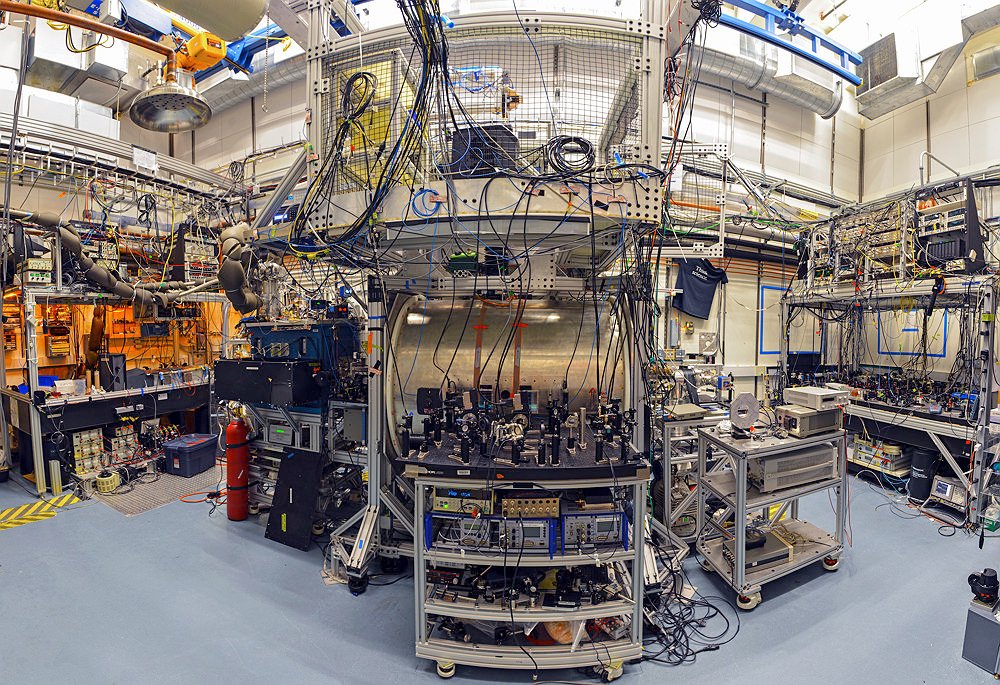
❄️ FUN FACT: Quantum computers need to be COLD. We’re talking colder than outer space—about 0.015 degrees above absolute zero (−273.14°C). That’s 180 times colder than interstellar space. They use dilution refrigerators that cost hundreds of thousands of dollars just to keep the qubits stable enough to work.
Companies Are Going All-In
IBM now offers cloud access to quantum processors with up to 156 qubits. You don’t need your own billion-dollar quantum lab—you can rent time on one through the cloud. IBM’s roadmap targets a quantum-centric supercomputer with over 4,000 qubits by 2033.
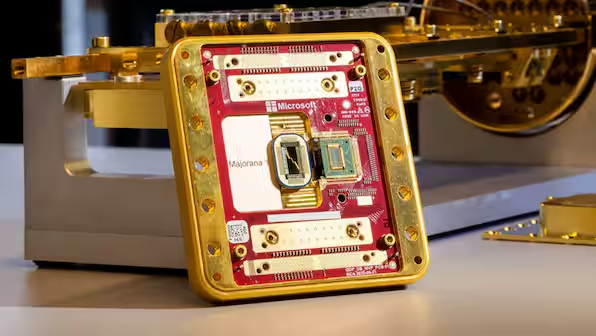
Microsoft is developing topological qubits with their Majorana 1 processor, designed to scale to a million qubits. They’re partnering with startups like Quantinuum and Atom Computing to accelerate development.
Amazon, Google, Intel, D-Wave—every major tech company has quantum initiatives. Governments are pumping billions into quantum research. China, the US, and the EU are in a flat-out quantum arms race.
When this many smart people are throwing this much money at something, it’s worth paying attention.
What Can Quantum Computers Actually Do?
Alright, enough theory. Let’s talk about what you can actually use these things for. Because quantum computers aren’t better at everything—they’re just impossibly better at specific things.
Drug Discovery and Medicine
This is probably the most exciting application. Designing new drugs is essentially a massive molecular simulation problem—you need to understand how different molecules interact at the atomic level.
Classical computers struggle with this because the number of possible molecular interactions explodes exponentially. But quantum computers? They’re literally simulating quantum systems with quantum systems. It’s like using a flight simulator to train pilots—except the simulator is actually flying.
Pharmaceutical companies are already using quantum computers to accelerate drug discovery. We’re talking about potentially reducing the time to develop new medicines from 10-15 years to maybe 5-7 years. That could save millions of lives.
Cancer treatments, Alzheimer’s drugs, antibiotic-resistant bacteria solutions—quantum computing could crack all of these faster than we ever thought possible.
Breaking (And Protecting) Encryption
Here’s where it gets scary: sufficiently powerful quantum computers will be able to break most of our current encryption. All those HTTPS websites, encrypted messages, secure bank transactions? A powerful quantum computer could crack them.
The good news? We know this is coming, so we’re preparing. The National Institute of Standards and Technology (NIST) just released new post-quantum cryptography standards—encryption methods that even quantum computers can’t break.
Companies and governments are racing to implement these new standards before quantum computers become powerful enough to pose a real threat. It’s like reinforcing your house before the hurricane arrives—you know it’s coming, so you prepare.
On the flip side, quantum computers will also enable ultra-secure quantum communication networks that are theoretically impossible to hack. Quantum key distribution is already being deployed in some countries.
🔐 FUN FACT: Some security experts worry about “harvest now, decrypt later” attacks where hackers steal encrypted data today and just sit on it, waiting for quantum computers to become powerful enough to decrypt it. If you sent a super secret message in 2025, someone might be able to read it in 2035. Creepy, right?
Climate Modeling and Materials Science
Climate change is incredibly complex. Weather patterns, ocean currents, atmospheric chemistry—there are so many variables interacting in complicated ways that even our best supercomputers struggle to model it accurately.
Quantum computers could dramatically improve climate predictions, helping us understand exactly what’s happening and what we need to do about it.
They’re also perfect for designing new materials. Want to create a room-temperature superconductor? Better solar panels? More efficient batteries? These are all quantum-level problems that quantum computers can tackle.
Researchers are using quantum computers to design new catalysts for carbon capture, more efficient fertilizers that require less energy to produce, and materials that could revolutionize energy storage.
Optimization Problems
D-Wave’s new Advantage2 system has over 4,400 qubits specifically designed for optimization problems. What’s an optimization problem? Think:
• What’s the most efficient route for 1,000 delivery trucks?
• How do you schedule 50 flights with 20 gates?
• What’s the best way to allocate power across an electrical grid?
• How do you optimize a supply chain with millions of variables?
These problems get exponentially harder as they scale up. Classical computers often can’t find the truly optimal solution—they just find something good enough. Quantum computers can find better solutions faster.

The Challenges (Because It’s Not All Smooth Sailing)
Look, I’m excited about quantum computing, but let’s be real about the obstacles. This technology faces some serious hurdles.
Quantum Computers Are Ridiculously Fragile
Remember how I said they need to be colder than outer space? That’s not an exaggeration. These machines are incredibly sensitive to everything:
• Temperature fluctuations kill quantum states
• Vibrations destroy calculations
• Electromagnetic interference causes errors
• Even cosmic rays from space can mess things up
Qubits maintain their quantum state for only microseconds to milliseconds before they “decohere” and lose their quantum properties. It’s like trying to do complicated math on a whiteboard that’s being erased in real-time.
Error Rates Are Still High
Even with Google’s breakthrough, quantum computers still make a lot of mistakes. Current best error rates are around 0.000015% per operation. That sounds good until you realize complex calculations need millions of operations.
The solution is quantum error correction—using multiple physical qubits to create one reliable “logical” qubit. But this requires massive overhead. You might need 1,000 physical qubits to make one useful logical qubit.
It’s getting better fast, but we’re not quite there yet for fault-tolerant, large-scale quantum computers.
Not Everything Benefits From Quantum
Here’s a misconception: quantum computers won’t replace regular computers. They’re not better at everything—just specific things.
Your laptop will still be better for email, web browsing, word processing, and most everyday tasks. Quantum computers excel at problems involving:
• Molecular simulation
• Cryptography
• Complex optimization
• Certain AI/machine learning tasks
They’ll work alongside classical computers in hybrid systems, handling the problems they’re uniquely suited for while regular computers do everything else.
🎲 FUN FACT: There’s actually a debate about whether quantum computers use 10 or more fundamentally different technologies to build qubits! We’ve got superconducting circuits, trapped ions, silicon spins, photonic qubits, topological qubits, and more. It’s like the early days of regular computers when we hadn’t figured out the best approach yet. Nobody knows which technology will win.
The Quantum Race: Who’s Winning?
Right now, it’s a fascinating horse race between different approaches and different companies. Let’s look at the major players:
IBM: The Steady Giant
IBM’s been in quantum since the 1990s. They’re playing the long game with superconducting qubits and have the most mature cloud quantum platform. Their roadmap is aggressive but realistic, targeting 4,000+ qubits by 2033.
They’re also working on quantum-classical hybrid systems—where classical computers handle some parts of calculations and quantum computers tackle the quantum-specific bits.
Google: The Moonshot Maker
Google makes big splashes. Their Willow chip breakthrough put them back in the spotlight after their 2019 “quantum supremacy” claim. They’re pushing hard on error correction and aren’t afraid to make bold claims.
Google’s advantage is resources—they can afford to take risks on ambitious projects that might not pay off for a decade.
Microsoft: The Dark Horse
Microsoft is betting on topological qubits—a totally different approach that, if it works, could be way more stable than current methods. It’s riskier but could pay off huge.
They’re also partnering with smaller companies rather than building everything in-house, which speeds up development.
The Startups and Specialists
IonQ uses trapped ion technology. Rigetti focuses on superconducting qubits. D-Wave specializes in quantum annealing for optimization. Quantinuum is working with trapped ions. Each has different strengths and target applications.
The diversity is actually healthy—we’re still figuring out the best approaches, and having multiple technologies competing drives innovation faster.

When Will This Actually Matter To You?
The honest answer? It depends on who “you” are.
If You’re a Regular Person
You won’t own a quantum computer. Ever. They’re not going in your house or your pocket. They’re too specialized, too expensive, and too delicate.
But you’ll benefit from quantum computing indirectly:
• New medications developed faster
• Better batteries for your electric car
• More accurate weather forecasts
• More secure online banking and communications
• More efficient delivery and logistics
Timeline? Some of these benefits are already trickling in. Others might take 5-15 years. But they’re coming.
If You’re In Business or Research
You need to be paying attention right now. Companies in pharmaceuticals, finance, materials science, logistics, and cybersecurity should all have quantum strategies.
You can already access quantum computers through the cloud from IBM, Amazon, Google, and others. Start experimenting. Figure out if your problems are quantum-solvable. Build expertise.
The companies that wait until quantum computers are “ready” will find themselves years behind competitors who started experimenting today.
If You’re In IT/Security
Start implementing post-quantum cryptography yesterday. This isn’t optional. The migration to quantum-safe encryption will take years, and you need to finish before quantum computers become powerful enough to break current encryption.
Major tech companies and governments are already making this transition. If you’re not, you’re creating massive future liabilities.
🌍 FUN FACT: Multiple cities are trying to become “Quantum Silicon Valley.” Chicago, Colorado, Tennessee, Maryland, Connecticut, and Massachusetts all have quantum initiatives fighting for tech talent and funding. It’s like the gold rush, but for physicists and quantum engineers instead of miners.
What’s Coming Next (The Next 5-10 Years)
Based on current roadmaps and expert predictions, here’s what to expect:
2025-2027: Quantum Advantage Demonstrations
We’ll see more real-world examples like the IonQ medical simulation—narrow applications where quantum clearly outperforms classical. These won’t be earth-shattering yet, but they’ll prove the technology works.
2027-2030: Early Commercial Applications
Pharmaceutical companies will likely be the first to see major commercial value. Materials science and optimization could also hit commercial viability. We’re talking about actual products and services being built on quantum computing.
2030-2035: Fault-Tolerant Quantum Computing
This is when things get really interesting. If error correction continues improving at the current rate, we’ll have quantum computers that can run long, complex calculations reliably. This is when the technology becomes truly transformative.
The Bottom Line
Quantum computing in 2025 is where artificial intelligence was in 2015. It’s real, it’s working, but it’s still early. The breakthroughs are accelerating. The investments are massive. The potential applications are genuinely transformative.
Will quantum computers solve all our problems? No. Will they replace classical computers? Also no. But will they crack problems that are currently unsolvable and open doors we didn’t even know existed? Absolutely yes.
The United Nations didn’t declare 2025 the International Year of Quantum Science and Technology because it sounds cool. They did it because this field is reaching a tipping point where theory becomes reality.
Google’s Willow chip achieving below-threshold error correction is the Wright Brothers moment. IonQ beating classical computers at a real task is the first commercial flight. We’re watching a genuinely new form of computing emerge from the lab into the world.
The quantum revolution isn’t coming—it’s here. It’s just not evenly distributed yet. The next decade will determine whether quantum computing lives up to its world-changing potential or remains a powerful but niche technology.
Based on what’s happening in 2025? My money’s on world-changing. Time to start paying attention.
🚀 FINAL FUN FACT: Richard Feynman, one of the greatest physicists ever, proposed the idea of quantum computers in 1981. He said, “Nature isn’t classical, dammit, and if you want to make a simulation of nature, you’d better make it quantum mechanical.” It took 40+ years, but we’re finally building what Feynman imagined. And he was absolutely right.

Don't Miss Out on Expert Insights!
Join 10,000+ smart readers who get our best articles, exclusive tips, and actionable strategies delivered straight to their inbox. No spam, no fluff—just valuable content you can't find anywhere else. Plus, get our free guide when you subscribe today!